
How to Build a Brand Voice That Works When It Matters Most: The KitKat Lesson
One sentence. Six continents. Here's what the KitKat heist really taught us about brand voice.
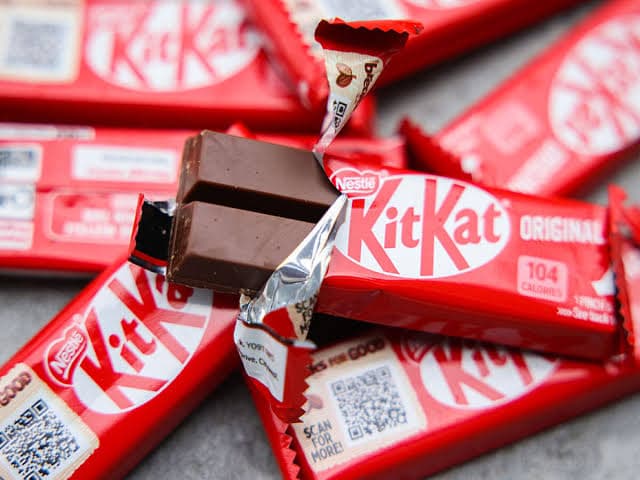
In briefA brand voice that works is consistent, specific, and recognisable out of context. KitKat's 'Have a Break' works because it owns one thought and repeats it every time. Brand voice fails when it changes by platform, by writer, or by mood.
On March 28, 2026, someone drove off with a truck full of chocolate. Not a candy bar or two. Twelve metric tons. Over 400,000 individual KitKat bars, vanishing somewhere between Italy and Poland.
Most brands would have issued a statement, called legal, and hoped the story died quietly. KitKat cracked a joke instead. The response went viral across six continents. Dozens of global brands piled on. The US Senate used the moment to push a retail theft bill. Business schools started updating their case studies.
But here is the part most people missed: the KitKat heist did not go viral because of the theft. It went viral because the brand knew exactly who it was. And when the moment came, it had the confidence to stay in character. That distinction is worth everything to a small business building a brand.
What Actually Happened
The heist itself was brazen. Nestlé confirmed the loss publicly on March 28. The truck was intercepted in transit between its production site in Italy and its destination in Poland. No one was hurt. No safety issue. No supply disruption. Just a very bold criminal, a very empty truck, and a very good setup.
- 12T: Metric tons of KitKat bars stolen
- 413K: Individual bars gone in one night
- 6: Continents where the story trended
KitKat's response, delivered through social media and press statements, did not read like a corporate statement. It read like a brand that had been waiting for this exact moment:
"We have always encouraged people to have a break with KitKat — but it seems thieves have taken the message too literally and made a break with more than 12 metric tons of our chocolate." — Nestlé KitKat, Official Statement, March 2026
One sentence. On-brand from the first word to the last. Tied directly to the brand's 87-year-old tagline. Zero legal hedging. Zero corporate distance.
The internet did the rest. Charlotte FC announced 413,000 KitKats would be available at their next match. DoorDash claimed a "packaging error" had left them with 12 tons they couldn't sell. Kerala Tourism posted. IRCTC posted. UP Police posted. Air India posted. Blinkit posted a hand-drawn sketch.
The Key Insight
The brand posted one statement. The world built the campaign around it. That is what a settled, recognizable identity enables, it creates gravity that other brands and audiences want to orbit.
Why It Worked: The Mechanics
This was not luck. Every element of KitKat's response was enabled by decisions made long before March 28. Here is a breakdown of what Nestlé got right, and why every single element maps directly to strategic brand design for entrepreneurs.
1. The voice was already built before the moment arrived
LESSON 01: Identity precedes opportunity
KitKat did not invent a funny personality on the day of the heist. That voice; playful, self-aware, tied tightly to a simple brand promise, had been in place for decades. The "Have a break" tagline is not a marketing slogan. It is a worldview. When the crisis hit, KitKat did not have to decide who to be. They already knew.
Steve Soltis, who previously led executive communications at The Coca-Cola Company, was direct in his analysis: their playful reply worked because it was also thoughtful and strategic. They could have issued a standard statement, but instead used the moment to reinforce their brand in a way that felt authentic and on-brand.
2. They had the receipts to back up the confidence
LESSON 02: Humor without context is reckless
KitKat did not joke about everything. Before leaning into humor, they confirmed the situation was isolated; no one hurt, no ongoing safety concern, no pattern of negligence. Soltis made the point directly: humor works when no one is harmed and the business has not suffered materially. Nestlé was clear about both. That clarity is what made the humor land.
There is a reason the Pepsi-Kendall Jenner ad is taught as a cautionary tale in the same courses where KFC's FCK campaign is taught as a masterclass. One brand had cultural credibility and proportionate stakes. The other had neither.
3. They gave the internet something to build on
LESSON 03: Strong voices create gravity
The KitKat statement was not just funny. It was a template. It invited other brands into the frame by establishing a tone, a premise, and an obvious entry point. Charlotte FC, DoorDash, Air India, IRCTC, Kerala Tourism, Blinkit; none of those activations cost KitKat a single dollar. The brand set the stage and let the internet perform.
That is what a strong brand voice guide does in a viral moment. It does not just respond. It creates gravity. Other brands, creators, and audiences get pulled toward it.
This Is Not New. The Lesson Has Been Available for Years.
The KitKat heist is the most recent example of a pattern that keeps repeating. Brands with a clear, lived-in voice turn problems into platform moments. Brands without one go silent, go corporate, or make things worse.
Case Study · 2018: KFC's FCK Moment
In February 2018, KFC ran out of chicken. Not at one location. At 750 of its 900 UK restaurants. People called the police. The hashtag #ChickenCrisis had 53,000 mentions in a single day.
KFC's response was a full-page newspaper ad featuring their iconic red bucket with the letters rearranged to read "FCK." Below it: "A chicken restaurant without any chicken. It's not ideal."
- +31%: Net positive sentiment by end of 2018 (from -17% during crisis)
- 8.1%: UK market share in 2019, up from 7.3% pre-crisis
- 3: Gold Lions at Cannes for the FCK campaign
No press conference. No executive non-apology. Three letters and a sentence. KFC's head of brand engagement said it plainly: "So often when a crisis hits, the easy and most comfortable thing is to retract into that safe corporate space where everything sounds like it is written by a lawyer." They chose not to. They chose their brand.
The Coast Global Insight: If your voice disappears during tough times, it was never real to begin with. Brand identity is not decoration. It is infrastructure. It is what tells your team exactly what to say when there is no time to think about it.
What This Means if You Run a Small Business
When people analyze the KitKat moment, they focus on the response. The wit. The speed. The domino effect of brands joining in. They treat it like a lesson in social media strategy. It is not. It is a lesson in brand architecture.
The response was easy because the identity was settled. KitKat did not brainstorm a tone during the crisis. They did not A/B test their voice in a boardroom while thieves fled with their inventory. The voice was already there — built in, consistent, and recognized.
That is what a small business needs to understand. The viral moment is not the strategy. The viral moment is the reward for having done the work first.
The Practical Truth About Brand Voice
Most small businesses treat brand voice as an aesthetic decision — the colors, the font, whether the caption sounds casual or polished. That is the wrong frame. Brand voice is an operational asset. It is the document your team consults when they do not know what to say. It is the filter that makes decisions faster. It is the consistency that makes your audience feel like they know you.
Brand voice is not what you say. It's the muscle memory that fires before you have time to think.
Reactive Marketing vs. Chasing Trends
This is where most small businesses get it wrong when they try to copy the KitKat moment. They see a trending topic, jump on it, and wonder why the post lands flat. The difference is not timing or wit. It is whether the response feels like it came from you or from someone trying to be you.
Charlotte FC's KitKat joke worked because it felt like Charlotte FC. DoorDash's riff worked because it felt like DoorDash.
Three Things Small Business Owners Can Do Starting Now
- Nail your brand voice in writing before you need it. Not a mood board. Not a tagline. A document that tells anyone who writes for you how you sound, what you never say, and why.
- Build the reflex to ask "is this us?" before "is this trending?" Every reactive moment is a test of identity. If you jump on a trend and it does not feel like you, your audience notices. Speed matters. Fit matters more.
- Understand that brand clarity is not a luxury for when you scale. It is the precondition for scaling. Every piece of content you publish is either building or eroding your reputation. Consistency compounds. Inconsistency leaks. Signs your business needs a rebrand often start here.
The Hard Truth Most Founders Skip
When you look at the KitKat moment, or the KFC moment, it is tempting to think the magic is in the response. It is not. The magic was invisible. It happened years before the crisis, in the rooms where someone decided: this is who we are, this is how we sound, this is what we never compromise.
KFC's CMO was asked years later what made the FCK campaign possible. Her answer cut through everything: "If your voice disappears during tough times, it was never real to begin with."
The moment does not create the brand. The brand creates the moment.
Your Brand Should Have an Answer Before the Question Arrives
At The Coast Global, we build the brand architecture that makes every touchpoint; every post, every response, feel like it could only have come from you.
Book a Free Brand Audit | See Our Services
THE COAST — We turn visions into empires.
Let's create something remarkable together.
