The Complete Guide to Brand Design Services: What You're Really Paying For
Confused by brand design services? This guide breaks down exactly what a professional engagement includes, how pricing structures work, realistic timelines, and how to evaluate a studio so your investment drives real market growth.
In briefBrand design services include logo design, colour palettes, typography, brand guidelines, and collateral. What you're really paying for is not files — it's a coherent visual system that communicates your positioning at every touchpoint without you having to explain it.
When business leaders decide it is time to invest in their company image, the search usually begins with a simple query. They look for brand design services, but they quickly find themselves lost in a sea of conflicting information, wildly varying price tags, and vague deliverables. Some designers charge a few hundred dollars, while established studios quote tens of thousands. Understanding what you are actually paying for requires looking past the surface of a simple logo and examining the strategic foundation that drives memorable brands.
The confusion often stems from a misunderstanding of the terminology. Many people use the terms logo design, brand identity, and brand design interchangeably, but they represent very different scopes of work. At the highest level, building a memorable brand is not an art project. It is a business initiative designed to differentiate your company, attract your ideal audience, and command premium pricing.
This guide serves as your definitive resource for navigating the branding process. Whether you are a startup preparing for a launch or an established company needing to reposition in a crowded market, understanding the mechanics of a professional branding service will help you make a confident, informed decision.
What is Brand Design?
To understand the value of this investment, we must first answer the foundational question: what is brand design? In the simplest terms, brand design is the visual translation of your business strategy. It is the process of taking who you are, who you serve, and how you differ from the competition, and turning those abstract concepts into a tangible, cohesive visual system.
A common mistake is assuming brand design is just a logo. A logo is a single mark. It is a useful tool, but it cannot do the heavy lifting of building a memorable brand on its own. Think of your logo as the front door of your house. It invites people in, but it does not dictate the layout of the rooms, the color of the walls, or the feeling of walking through the space.
Brand identity services take a broader approach. Brand identity encompasses all the visual elements that represent your business. This includes your logo, your color palette, your typography, your photography style, and your iconography. It is the complete ecosystem of visual assets you will use across your marketing materials.
Brand design goes one step further. It is the strategic application of that identity. It is the thoughtful process of ensuring that every single time a customer interacts with your business, whether they are visiting your website, opening a packaging box, or reading an email, they experience a consistent and recognizable pattern. Brand design bridges the gap between your business strategy and your visual identity, ensuring that every design choice serves a specific business goal. When you hire a studio for brand design services, you are paying for this strategic alignment, not just a collection of graphic files.
What is Included in a Full Engagement
When you partner with a professional studio for a comprehensive branding service, the process is highly structured. A full engagement moves through distinct phases, each building upon the last to create a robust and defensible market position. You can view a detailed breakdown of our specific process on our brand design services page, but the general framework looks like this.
Discovery and Research
The design phase never begins on day one. A reputable studio will spend the first portion of the engagement learning everything about your business. This involves stakeholder interviews to understand leadership goals, competitor analysis to map the market landscape, and audience research to uncover the deep motivations of your ideal customers. This research phase ensures the resulting design is based on data and reality rather than subjective guesswork.
Brand Strategy
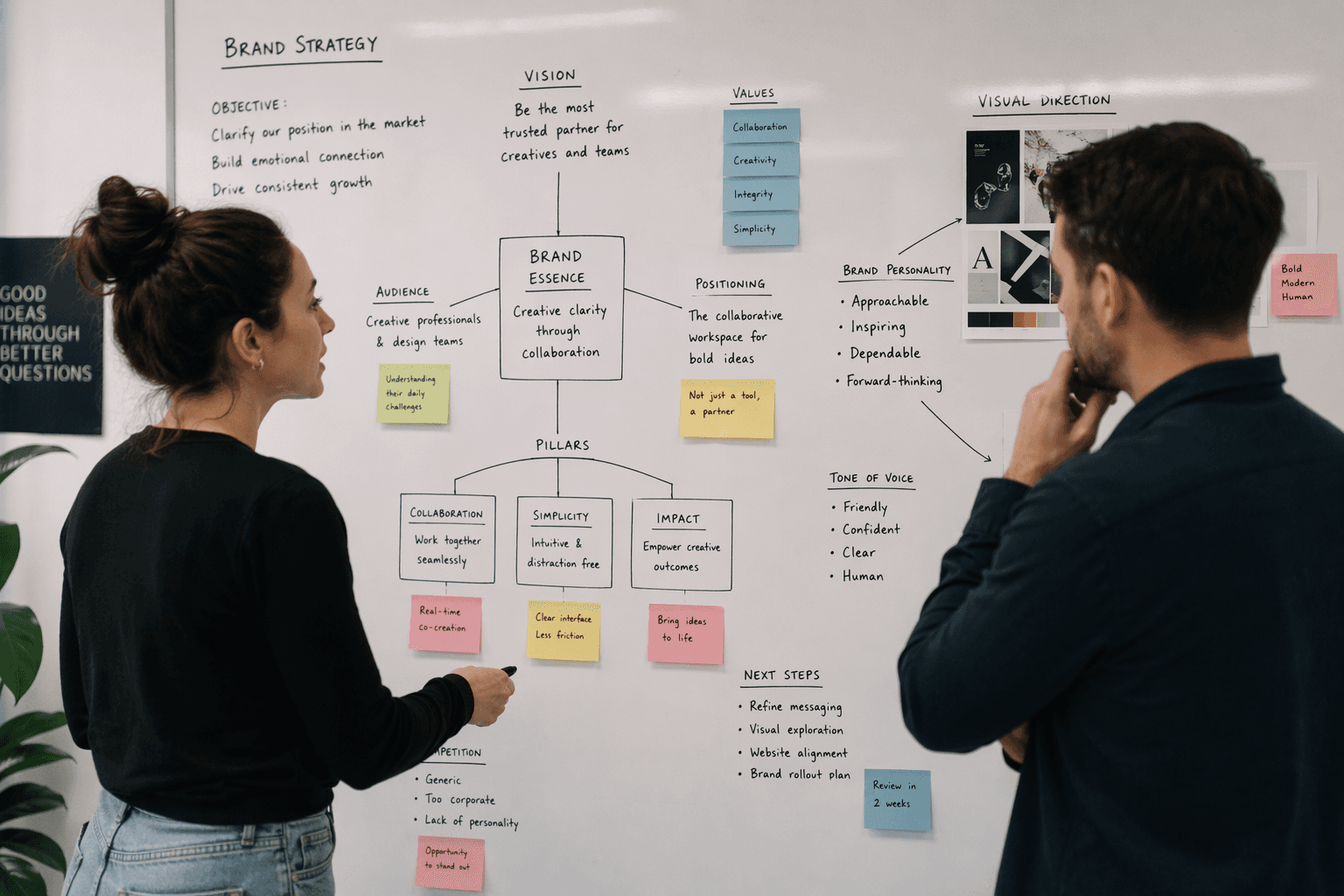
Before a single pixel is pushed, the strategic framework must be established. This includes defining your brand positioning, which is the specific niche your company occupies in the mind of your customer. It also involves crafting your brand voice, your core messaging pillars, and your brand personality traits. If the visual design is the front door of the house, the strategy is the foundation. A beautiful logo built on a weak strategy will eventually crumble under market pressure.
Visual Identity Development
This is the phase most people associate with brand design services. The design team takes the strategic framework and begins exploring visual concepts. They will present a few distinct creative directions, usually centered around different overarching themes. Once a direction is chosen and refined, the team will finalize the primary logo, secondary logo variations, the color system with specific hex codes and usage rules, and the primary and secondary typography pairings.
Touch points and Collateral Design
A logo file on a computer screen does not help a sales team close deals. A full engagement includes the application of the new visual identity to real world assets. This typically includes business card design, letterheads, email signatures, and social media templates. Depending on the scope, it may also include packaging design, trade show displays, or vehicle wraps. The goal is to ensure you have immediate, practical assets to launch the new brand into the world.
Brand Guidelines Documentation
The final, and perhaps most critical, deliverable is the brand guidelines book. This is a comprehensive document that dictates exactly how the brand should be used. It outlines clear rules for logo spacing, incorrect logo usage, color proportions, and typography hierarchy. This document acts as a legal shield for your brand, ensuring that as your company grows and hires new marketers or outside vendors, the visual identity remains perfectly consistent.
The Financial Breakdown: Pricing Ranges
The most common question business leaders ask is about cost. Pricing for brand identity services varies wildly, and understanding why requires looking at the different tiers of the market. You can review our specific tier structures on our pricing page, but the industry generally falls into three distinct categories.
The Budget Tier: Five Hundred to Three Thousand Dollars
At this price point, you are typically hiring a junior freelancer or purchasing a pre made template. The process is usually highly abbreviated. There is little to no strategy involved, and the discovery phase consists of a short questionnaire. The designer will often rely heavily on trending aesthetics from sites like Pinterest or Dribbble. The deliverables usually include a logo, a few basic colors, and standard fonts. There are no brand guidelines, and there is rarely any application design. While this option fits a tight budget, it often results in a generic visual that does not differentiate the business and must be replaced as the company grows.
The Professional Tier: Ten Thousand to Thirty Thousand Dollars
This is the sweet spot for established small businesses, growing startups, and companies looking to seriously reposition themselves. At this level, you are hiring a specialized studio. The engagement includes deep discovery, competitor analysis, and formal brand strategy. The design phase is highly collaborative, involving multiple rounds of exploration and refinement. You receive a complete visual system, extensive collateral design, and a detailed brand guidelines book. The resulting brand is built to last for years and scale with the company. This tier represents a true business investment rather than a simple transactional purchase.
The Enterprise Tier: Fifty Thousand to Two Hundred Thousand Dollars or More
Enterprise branding involves massive organizations with multiple sub brands, global audiences, and complex stakeholder hierarchies. These engagements can take six months to a year. They involve extensive market research, focus groups, internal change management, and the rollout of the brand across thousands of physical and digital touchpoints. The agencies handling these projects are large, global firms with deep resources.
When evaluating these costs, consider the long term return on investment. A professionally designed brand commands higher prices, attracts better talent, reduces customer acquisition costs, and builds lasting loyalty. The cost of a rebrand a few years down the line because the first one was done poorly will always exceed the cost of doing it right the first time.
Realistic Timelines for a Branding Service
Another major point of confusion is timeline. Building a memorable brand cannot be rushed. A common red flag in the industry is a studio that promises a complete brand in a week or two. Quality design requires time for research, conceptualization, iteration, and refinement. A standard professional engagement typically follows this timeline.
Weeks One and Two: Discovery and Strategy
This phase is entirely focused on information gathering and synthesis. The studio conducts interviews, performs market research, and develops the strategic foundation. While some clients are eager to "see designs" during this phase, holding off ensures the visual work has a solid target.
Weeks Three and Four: Concept Development
The design team begins translating the strategy into visual concepts. They will explore shapes, colors, and typography that align with the brand personality. This phase results in two or three distinct conceptual directions presented to the client.
Weeks Five and Six: Refinement
After the client reviews the initial concepts and provides feedback, the studio narrows the focus to one direction. This is where the fine tuning happens. The logo is perfected, the color palette is balanced, and the typography is paired flawlessly.
Weeks Seven and Eight: Application and Delivery
The final visual identity is applied to the agreed upon collateral, and the brand guidelines document is compiled and formatted. The studio conducts a final handover, providing all necessary file formats and walking the client through the guidelines.
While eight weeks is a standard benchmark, complex projects with extensive collateral needs or multiple stakeholders can easily extend to ten or twelve weeks. Factoring this timeline into your business calendar is crucial for a smooth launch.
How to Evaluate a Brand Identity Services Provider
Choosing the right partner is arguably more important than the budget or the timeline. The market is flooded with talented visual designers, but visual talent alone does not make a great branding partner. You need a team that understands business strategy. As you review potential studios, keep these evaluation criteria in mind.
Look Beyond the Aesthetics
It is easy to be seduced by a beautiful portfolio. However, when looking at past work, ask yourself if the designs actually solve a business problem. Does the brand stand out in its specific industry, or does it just look like a pretty piece of art? A great studio will present their work with context, explaining the business challenge and how the design solved it. You can see how we tie visual outcomes to business results by exploring our work.
Prioritize Process Over Promises
During initial conversations, pay close attention to how the studio talks about their process. Do they start by asking about your business goals, your target audience, and your competitors? Or do they immediately start talking about logos, colors, and websites? A strategic partner will be just as interested in your business operations as they are in the visual output.
Assess Their Questioning
The quality of the questions a studio asks during the discovery phase is a direct reflection of the quality of the brand they will build. If their questions are surface level, the brand will be surface level. If their questions challenge your assumptions and force you to think deeply about your value proposition, you have likely found a strong partner.
Review a Specific Case Study
Ask to see a detailed case study of a past project that is similar in scope to yours. Look at the zappedCo brand identity case study on our site as an example. A proper case study will show the "before" state, the strategic thinking that drove the design, the final execution, and ideally, the results the client experienced after the launch. This level of transparency proves the studio can deliver from start to finish.
Red Flags When Hiring a Branding Service
The branding industry, unfortunately, has its share of questionable practices. Knowing the warning signs can save you thousands of dollars and months of frustration.
The Instant Guarantee
Any studio that guarantees you will "love it" or promises a specific outcome before doing any research is prioritizing sales over strategy. Design is subjective, and while a strategic foundation ensures the brand will work in the market, promising immediate emotional attachment from the client before the process begins is a manipulative tactic.
The Strategy Avoidance
If a potential partner dismisses the need for brand strategy and wants to jump straight into designing a logo, run the other way. Design without strategy is just decoration. A studio that skips strategy is leaving the success of your brand entirely up to chance.
Unlimited Revisions
Offering unlimited revisions sounds appealing, but it is actually a structural flaw in how a studio operates. Unlimited revisions usually mean the studio did not do the proper discovery work upfront to align with your vision, or they are using it as a marketing crutch because they lack confidence in their process. Professional engagements should have structured revision rounds, with clear feedback loops and a mutual understanding of the scope.
Template Based Work
Some studios charge premium prices but secretly use modified templates or stock vector art. Always ask about the originality of the work. A reputable studio creates every element of your visual identity from scratch, ensuring you own the copyright and that no other company in the world has a logo built from the same foundational shapes.
Hidden Costs and Missing Files
Ensure you understand exactly what you are getting at the end of the engagement. Some freelancers or agencies will withhold source files, forcing you to pay them every time you need a minor adjustment to a file. A full, professional engagement always includes the transfer of all native, editable source files upon final payment.
The Long Term Value of Your Investment
Choosing to invest in professional brand design services is a declaration that your business is ready to be taken seriously. It shifts your company from being a commodity that competes on price to a brand that competes on value and perception.
When you understand the difference between a simple logo and a comprehensive brand design system, you can better appreciate the timeline and the investment required. A strategically rooted brand becomes one of your most valuable business assets. It works for you constantly, building trust with every new prospect and creating a sense of belonging for your existing customers.
Take the time to evaluate potential partners carefully, look past superficial aesthetics to find strategic thinkers, and be willing to invest in a process that will serve your business for years to come. If you are ready to build a brand that genuinely connects with your audience and drives measurable growth, we invite you to explore our offers to find the right partnership fit for your specific goals. If you are still on the fence about whether a full rebrand is the right move for your company, you can check your brand score right now to see exactly where your current visual identity stands and uncover the specific areas holding your business back.
Let's create something remarkable together.